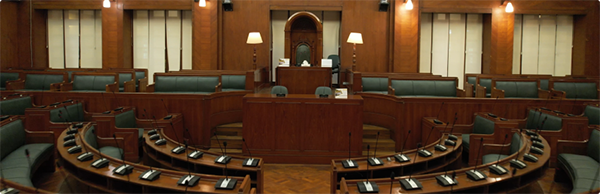
The Provincial Assembly of Sindh holds a distinguished place in Pakistan's political history. As the first legislature in British India to pass a resolution supporting the creation of Pakistan, and as a cornerstone of democratic governance in Sindh, the Assembly has significantly influenced the province's political, social, and economic landscape for nearly nine decades.
Separation from Bombay Presidency: Sindh was separated from the Bombay Presidency on 1 April 1936 under the Government of India Act 1935, becoming a separate province with its own legislative assembly.
First Elections: The first elections for the Sindh Legislative Assembly were held on 7 February 1937, leading to a 60-member assembly elected on communal and minorities' representation.
Inaugural Session: The first session of the Sindh Legislative Assembly convened on 27 April 1937 in Karachi, marking the beginning of Sindh's legislative autonomy.
First Premier: Sir Ghulam Hussain Hidayatullah became the first Chief Minister (then called Premier) of Sindh.
Joining Muslim League: Influential Sindhi leaders, including G.M. Syed, joined the All-India Muslim League in 1938, advocating for Muslim autonomy.
Pakistan Resolution: On 3 March 1943, the Sindh Assembly became the first legislature in British India to pass a resolution in favor of the creation of Pakistan, aligning with the Lahore Resolution of 1940.
Integration into Pakistan: Following Pakistan's independence in 1947, the Sindh Assembly continued to function, addressing post-independence challenges such as migration, resettlement, and economic development.
One Unit Policy: On 14 October 1955, Sindh was merged into the new province of West Pakistan under the One Unit policy, and the assembly was dissolved.
Abolition of One Unit: The One Unit scheme was abolished in 1970, and Sindh regained its provincial legislature.
1973 Constitution: The Sindh Assembly played a significant role in the drafting and adoption of Pakistan’s Constitution of 1973, which restored parliamentary democracy in the country.
Zulfikar Ali Bhutto Era: Under the leadership of Prime Minister Zulfikar Ali Bhutto, the assembly focused on land reforms, nationalization policies, and socio-economic development.
Martial Law: The assembly faced multiple dissolutions under General Zia-ul-Haq’s martial law regime.
MRD Movement: Sindh became a center for the Movement for the Restoration of Democracy (MRD), with the assembly and its members playing a significant role in resisting military rule and advocating for the return of democracy.
Since the restoration of democracy in 1988, the Sindh Assembly has enacted numerous laws addressing social welfare, gender equality, transparency, and governance.
Key Legislative Achievements:
Sindh Child Marriage Restraint Act, 2013: Raised the minimum marriage age to 18 years, one of the most progressive laws in Pakistan.
Sindh Protection of Human Rights Act, 2011: Established a framework for the protection of human rights in the province.
Sindh Transparency and Right to Information Act, 2016: Ensured citizens have access to public information, promoting transparency and accountability.
Sindh Prisons & Corrections Services Act: Introduced significant jail reforms, making the Sindh Assembly the first legislative assembly in Asia to adopt such measures.
Women's Representation:
Reserved Seats: The assembly has 29 reserved seats for women, enabling greater gender representation.
First Female Deputy Speaker: Shehla Raza became the first female Deputy Speaker of the Sindh Assembly, highlighting progress in women's political participation.
Digitalization: The assembly has embraced technology to improve governance, introducing digital platforms for public access to legislative proceedings, voting records, and assembly debates.
Public Engagement: Citizen feedback mechanisms have been launched to ensure that public concerns are addressed in the legislative process.
18th Amendment: The Sindh Assembly played a key role in the passage of the 18th Constitutional Amendment in 2010, which devolved significant powers from the federal government to the provinces, granting greater autonomy in matters such as education, health, and local governance.